You wrote the essay. You remember writing it. A teacher has told you that software says otherwise, and the burden of proof has somehow landed on you.
This happens to honest students, it happens more often to some students than others, and most schools were not prepared for it. This article is about what to do -- what evidence carries weight, how to raise it without making things worse, and what to change going forward. It is not about evading detection, and that distinction matters legally and practically: a student who tries to defeat the software converts an unfounded accusation into a real offence.
Why detectors flag honest work
AI detectors do not detect AI. They estimate how predictable a piece of text is -- roughly, how closely each word follows what a language model would expect given the words before it. Text that is statistically unsurprising scores as machine-written.
The problem is that plenty of honest human writing is statistically unsurprising, and the students who write that way are not randomly distributed.
Writing tends to score as predictable when it is:
- Formal and conventional. The five-paragraph essay structure taught in schools is, by design, highly patterned.
- On a common topic with a standard argument. Ten thousand students a year write about the causes of the First World War.
- Carefully edited. Removing idiosyncrasy is what editing does, and idiosyncrasy is what marks text as human to these tools.
- Written by someone drawing on a smaller working vocabulary. This is where the serious bias appears.
The confidence figures these tools present -- "98% AI-generated" -- are not probabilities that a person cheated. They are outputs of a statistical model applied to a single document, and they come with false-positive rates that the marketing does not foreground. It is worth knowing that OpenAI, which makes ChatGPT, withdrew its own AI-text classifier in July 2023. Its announcement page now carries the notice that the classifier "is no longer available due to its low rate of accuracy". The organisation with the most information about how this text is produced concluded it could not reliably detect it.
The second-language problem
This is the finding every school should know and many do not.
Research by Liang and colleagues, published in the journal Patterns in 2023, tested seven widely used GPT detectors on two sets of genuinely human-written essays: work by US school students, and TOEFL essays written by non-native English speakers. More than half of the non-native writers' essays were misclassified as AI-generated -- one detector flagged nearly 98% of them -- while more than 90% of the US students' essays were correctly identified as human.
The mechanism is the same one described above. Writing in a second language often means a more constrained vocabulary and more reliance on standard constructions -- which is precisely the signature these tools read as machine-generated. The same study found the effect ran in both directions: enriching the word choice in the non-native essays reduced how often they were flagged, while simplifying the native-speaker essays increased it. The detectors were, in effect, scoring vocabulary range rather than authorship.
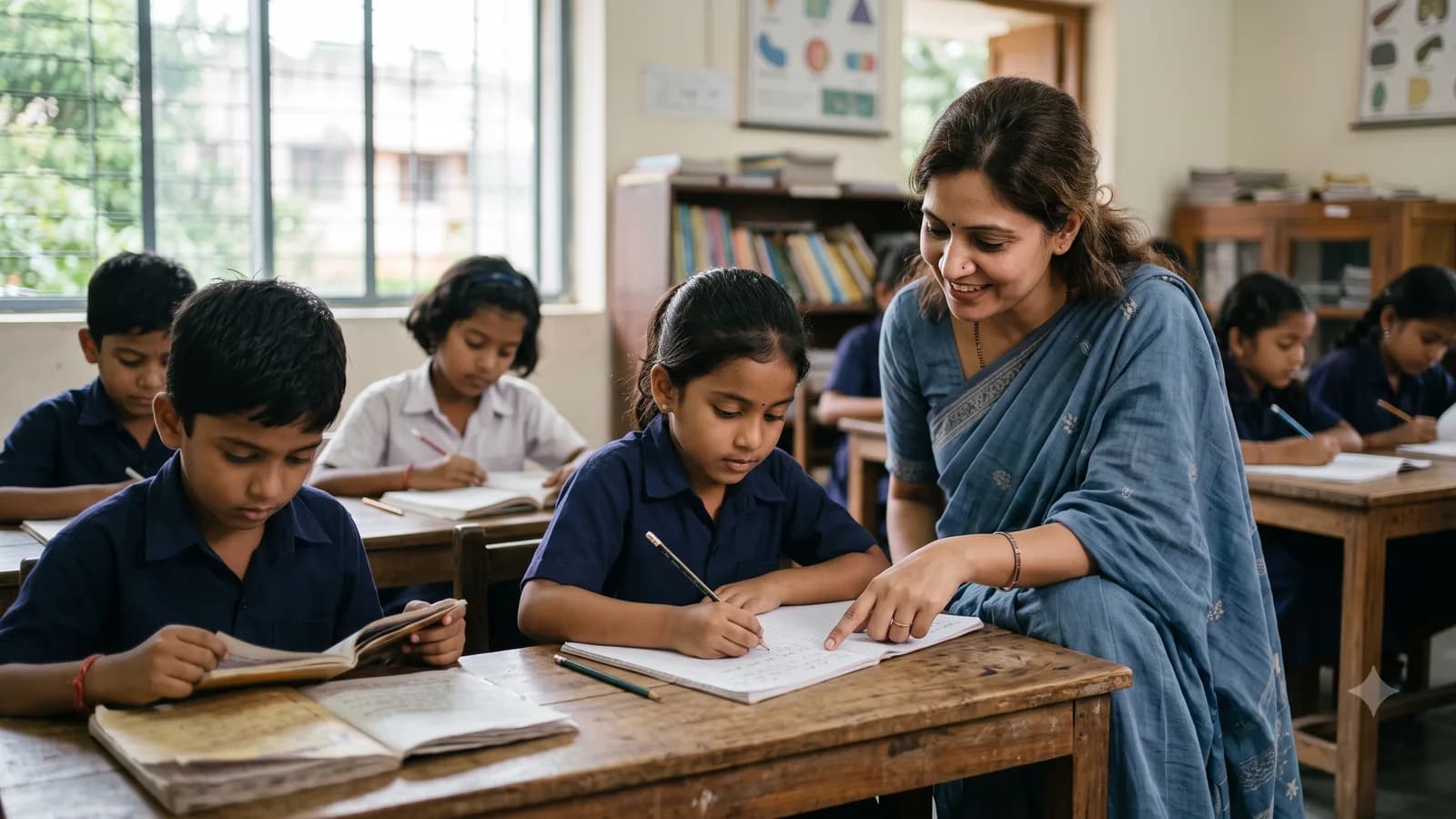
For students in India, and anywhere else where school work is produced in English as an additional language, this is not an abstract fairness concern. It means the tool is likelier to be wrong about you, and it means the study above is directly relevant evidence to put in front of a school.
Evidence that actually helps
The strongest position is process evidence: proof that the document came into existence gradually, the way human writing does.
Version history. Google Docs keeps a full revision history under File → Version history. Microsoft Word tracks versions for documents stored in OneDrive or SharePoint. This is the single most persuasive artefact available, because it shows the piece being built -- sentences written and rewritten, paragraphs moved, a conclusion that changed. Pasted text appears as a single large insertion, and its absence is exactly what you want to demonstrate.
Drafts, notes and outlines. Handwritten planning, a photographed page of notes, an earlier file saved under a different name. Messy is better than tidy here.
Search and browser history from the period. Evidence that you were reading around the topic while writing it.
Messages about the work. A text to a friend complaining about the essay on Tuesday night is contemporaneous evidence of authorship, and it is often the most human item in the file.
Your ability to discuss it. Offer, in writing, to talk the work through with the teacher: explain the argument, why a particular source was chosen, what you cut. A student who wrote something can do this easily. This offer is persuasive precisely because someone who had not written it would not make it.
A supervised rewrite. Volunteer to write a short piece on a related topic under supervision. If your normal writing is flagged by the software, a supervised sample that reads the same way is strong evidence about your style rather than your conduct.
Note what is not on this list: another detector saying you are clean. Running your work through a second tool to produce a contradictory score invites an argument about whose software is better, which is not an argument you win and not the point you want to make.
How to raise it with the school
Tone decides a lot here. The aim is to move the conversation from did you cheat to what is the evidence and what is the process, without making the teacher defensive.
Respond in writing, calmly, and quickly. State plainly that the work is your own and that you would like to understand the evidence. Keep everything in email so there is a record.
Ask three specific questions. What tool was used? What is its documented false-positive rate? Is the tool's output the sole basis for the allegation, or is there other evidence? These are reasonable questions and they are usually the point at which the conversation changes, because the answers are often "we don't know", "we don't know", and "yes".
Supply the process evidence unprompted. Do not wait to be asked. Version history, drafts, notes, attached.
Raise the second-language research if it applies. Not as an excuse. As a documented, published limitation of the specific class of tool being used. Name the study.
Ask for the school's policy. Most institutions have an academic-integrity procedure that includes a right of response and an appeal route. Asking for it in writing tends to ensure it is followed.
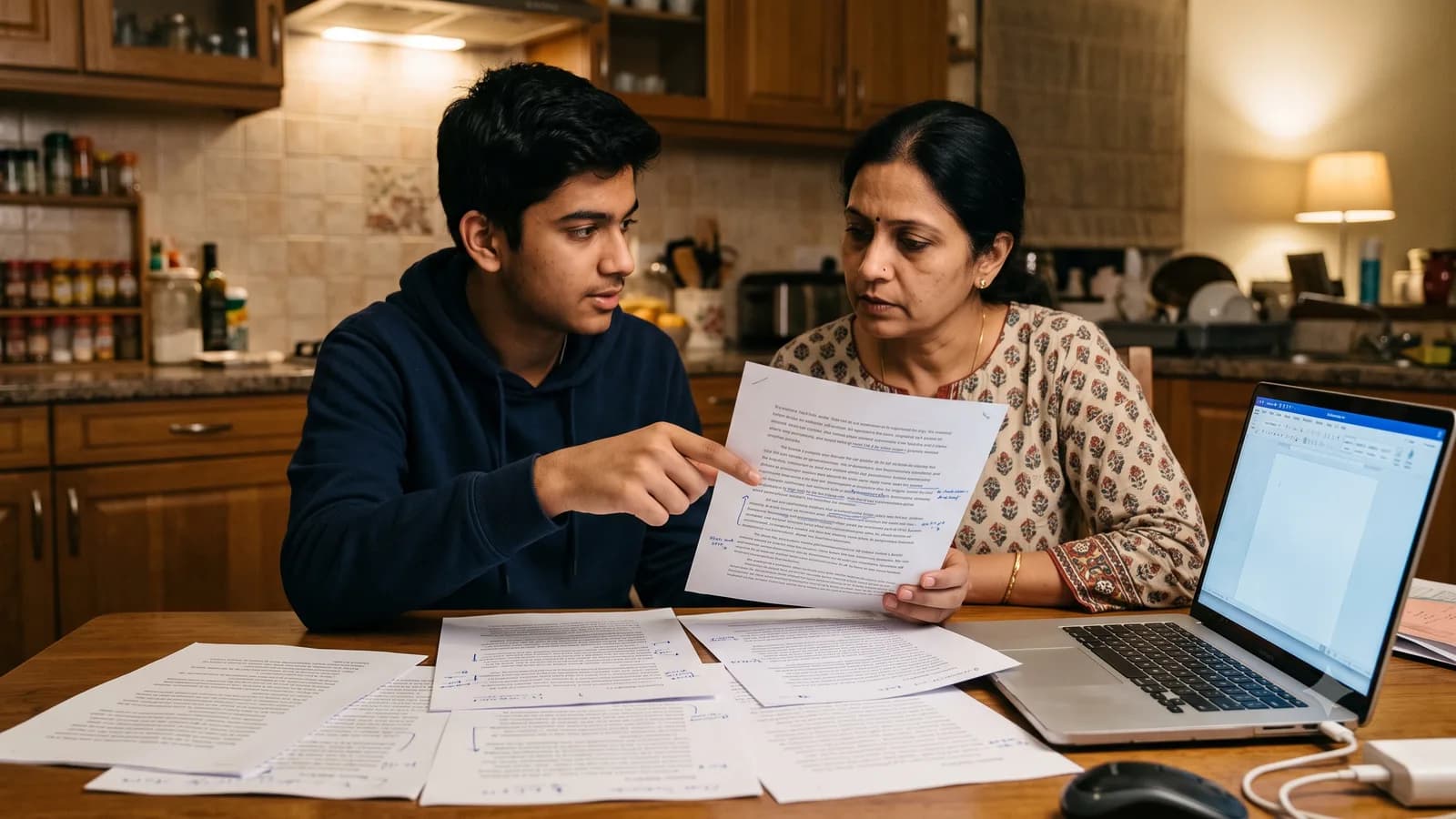
Escalate procedurally, not emotionally. If the teacher will not move, the next step is the head of department, then the school's academic-integrity or grievance process. Stay factual at every stage. Parents: your usefulness here is in being calm and organised, and that is genuinely most of it.
Protecting yourself in advance
Once this has happened to you, or to someone in your year, it is worth changing how you work. None of this is about hiding anything. It is about being able to prove an ordinary thing that used to require no proof.
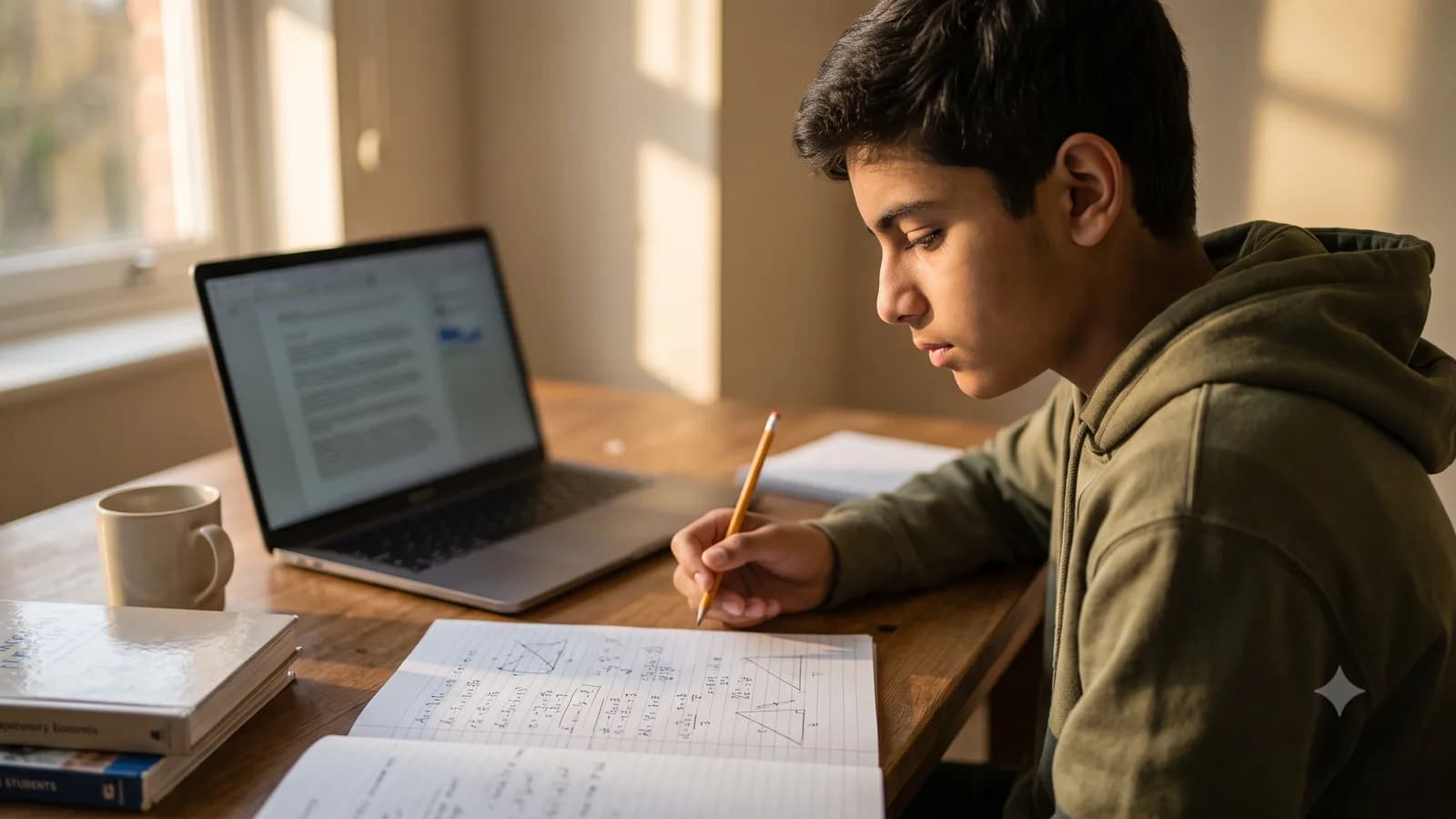
Write in an editor that keeps version history. Google Docs or Word with cloud saving. This costs nothing and converts a future accusation into a two-minute problem.
Do not compose somewhere else and paste in. A single paste of 900 words looks identical to the thing you are being accused of, even when you wrote those 900 words in a different app.
Keep your planning. Photograph handwritten notes before you throw them away.
Do not delete drafts. The intermediate files are the evidence.
Take a photo of your handwritten work occasionally, particularly for anything done outside class.
Ask before you use any AI tool for anything. Including grammar checking, rephrasing and translation. Policies differ wildly between schools and even between teachers, and "I didn't know that counted" is a much weaker position than a one-line email asking in advance.
What not to do
Do not use a humaniser or AI-text rewriter. These exist and are marketed at exactly this situation. Running your genuine work through one is catastrophic: you now have a tool in your history designed to evade detection, you have altered the evidence, and an honest student has acquired the exact artefact a dishonest one would have. If the case ever goes to a panel, that is the fact that decides it. This holds even though you did nothing wrong originally -- particularly then.
Do not deliberately worsen your writing. Adding errors to look more human is the same error in a cheaper form.
Do not sign anything you disagree with to make it go away. Admissions of an offence you did not commit go on record and get cited next time.
Do not go public before exhausting the school's process. It rarely helps and it tends to harden positions.
Do not let it go unrecorded. Even if it resolves informally, send a short email confirming the outcome. A second accusation is much harder to defend without evidence that the first was withdrawn.
The wider point, for schools and for families
Detection tools are being used as evidence in disciplinary processes while producing error rates their vendors do not prominently disclose and a documented bias against second-language writers. That combination is not defensible, and the reasonable institutional response is to treat a detector score as a prompt to look more closely rather than as a finding.
For families, the useful shift is from proving innocence after the fact to keeping a trail as a matter of habit. It is a small imposition and it settles the question in advance.
This article deliberately stays on due process rather than the ethics of AI use in schoolwork -- that is a separate question, and where the honest line sits is something we have written about in whether AI can help with homework without hollowing it out. If you are trying to decide what your household's policy should be, the evidence on what these tools do to students who lean on them is a better starting point than the detector debate, because it addresses the thing that actually matters.
This article is about due process, not about beating a detector. If the underlying worry is that your child's own written work is not yet strong enough to defend, that is something a teacher can help with directly.